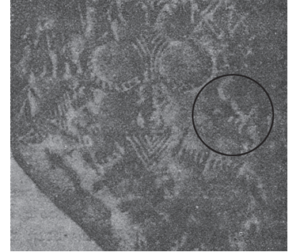
 Excavations conducted by researchers from Deccan College, Pune, and the Archaeological Survey of India (ASI) at Rakhigarhi (Hisar district, Haryana) revealed Harappan relics dating back 7,000 to 8,000 years. Among these discoveries were representations of the Shivalinga and the Pranava (Omkara), providing historical evidence of ancient Vedic culture and Sanatana Dharma.
The iconography of the Omkara found at the site offers deep philosophical alignment with sacred texts:
The Structure of Omkara: The three semi-circular curves represents the three Gunas of Nature (Sattva, Rajas, and Tamas), while the dot at the top signifies Paramatma (Supreme Consciousness).
Vedic Metaphor: The Mundaka Upanishad illustrates spiritual practice using a metaphor:
The Bow: Pranava (Om)
The Arrow: Jeeva (Individual Soul)
The Target: Brahman (The Divine Reality)
Internal Realization: The additional dots positioned on the left side of the symbol represent the Jeeva and Paramatma, emphasizing that this target is aimed and realized internally through introverted meditation (Pranava Sadhana).
Inverted Design: In these early relics, the central curve is directed upward, symbolizing the elevation of Sattva Guna required to attain union with the Supreme.
As described in the Shiva Purana, Linga Purana, and Brahmanda Purana:
Unmanifest Reality: The Shivalinga represents the unqualified, absolute Supreme Reality.
The Holy Trinity: It encapsulates the combined principles of Brahma, Vishnu, and Shiva.
Cosmic Form: Its oval form symbolizes the Brahmanda (Universal Egg), representing the interplay of Nature (Prakriti) and Consciousness (Purusha).
Conclusion: These archaeological discoveries suggest that the roots of Pranava worship, the Shivalinga, Vedic Philosophy, and Sanatana Dharma extend back at least eight millennia.
Vedic Influence in Harappan Relics: The Hastaghna
Another piece of evidence linking Harappan relics to Vedic culture is the presence of the Hastaghna—a protective wristguard used by ancient archers.
The Vedic Context of the Hastaghna
Mention in Sacred Texts: The Taittiriya Samhita (4th Kanda, 6th Anuvaka) describes warriors wearing a snake-like leather band around their wrists called a Hastaghna for protection during archery.
Functional Purpose: When a bowstring is released, it snaps back against the holding arm. The Hastaghna was tied around the wrist to cushion the recoil and prevent injury to the archer’s hand and arm.
Left vs. Right Hand: Typically, archers held the bow with their left hand and pulled the string with their right, meaning the guard was worn on the left wrist—as noted by Sayanacharya in his Veda Bhashya.
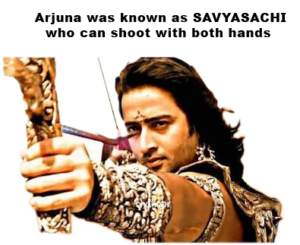
The Concept of Savyasachi: Archers capable of wielding a bow equally well with both hands were termed Savyasachi (a title famously given to Arjuna in the Mahabharata).
Significance in Harappan Depictions
In the relics of the Harappan civilization, depictions of Rudra show the Hastaghna on both wrists.
Rudra as Savyasachi: The dual wristguards indicate that Rudra was depicted as ambidextrous in archery, capable of shooting using either hand.
Divine Bows: Vedic tradition attributes two legendary bows to Lord Rudra: the Pinaka and the Ajagava.
Authenticity: Unlike the modern cinematic portrayal of solid metal gauntlets, the Harappan artifacts feature traditional tied leather guards matching the precise description found in the Vedas.
Conclusion: The depiction of the Hastaghna in Harappan iconography offers strong evidence that Vedic traditions and archer iconography were well-established during this era.