

Archaeological Evidence of Vedic Deity at Harappa and Mohenjo-daro
In her historical writings, Romila Thapar asserts that the inhabitants of the Indus Valley Civilization left behind no definitive traces of their religious practices, claiming that we cannot truly know their faith. However, a closer examination of the relics recovered from Mohenjo-daro strongly contradicts this view.
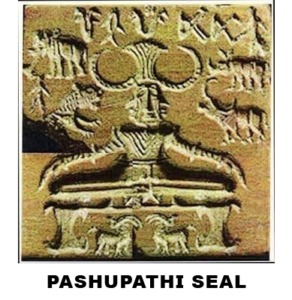 The famous “Pasupati” seal, often interpreted merely as a horned figure, actually mirrors the traditional descriptions of Lord Rudra found in the Vedas and the Shiva Ashtottara Shatanama (the 108 names of Shiva). Rather than horns, the distinct shape atop the deity’s head represents the sacred iconography of Rudra. Furthermore, the relics feature undeniable symbols of Vedic spirituality, including representations of the holy River Ganga, the partial contours of the Omkara, and explicit depictions of the Pranava symbol. The widespread presence of the Swastika alongside visual depictions of various incarnations of Lord Shiva clearly indicates that a deeply rooted Vedic tradition flourished during this civilization.