

The Chronological Contributions of Lokamanya Balagangadhara Tilak
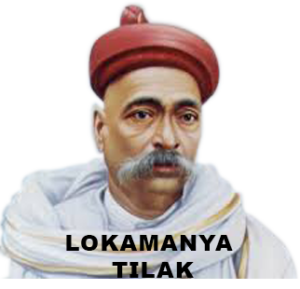
Lokamanya Balagangadhara Tilak dedicated significant effort to establishing ancient Indian chronology, particularly regarding the era of King Vikramaditya (Vikramarka). His research seamlessly corroborates the traditional dating of Indian history through astronomical observations.
A central component of Tilak’s methodology relies on the precession of the equinoxes. The term Vishuvat refers to the precise astronomical time when the sun crosses the celestial equator, marking the vernal equinox and the traditional beginning of the new year. In ancient times, astronomers tracked the position of the sun during the equinox against the backdrop of the lunar mansions (nakshatras or stars). Because of the Earth’s axial precession, the position of the Vishuvat moves backward through the stars over vast cycles.
Ancient calculations dictate that the equinox stays aligned with a single nakshatra for approximately 960 years. According to historical records, the Vishuvat was at the end of the Revati star during the time of the great astronomer Varahamihira. Varahamihira was a contemporary of King Vikramaditya, serving as one of the “Nine Gems” (Navaratnas) in his royal court—a historical detail explicitly documented by the poet Kalidasa. Traditional chronology fixes the start of the Vikrama Samvat (Vikrama Era) at 57 BCE.
Furthermore, Tilak highlighted text from the ancient scriptures indicating an era when the year began with the Punarvasu star. Counting backward through the zodiac from Revati to Punarvasu gives a distance of 8 nakshatras. To determine the antiquity of this Vedic period, we can calculate the total elapsed time up to the present day:
- Precession Time: 8 stars x 960 years = 7,680 years
-
Time before the Common Era (BCE): 7,680 years + 57 years (Vikrama Era) = 7,737 BCE
-
Total Antiquity: Adding the elapsed years up to the current period (2026 CE), we get:
8×960+57+2023=9760.
Through these precise astronomical alignments preserved in the sacred texts, Tilak demonstrated that the compilation of the Vedic mantras dates back to at least 9,760 years ago.